
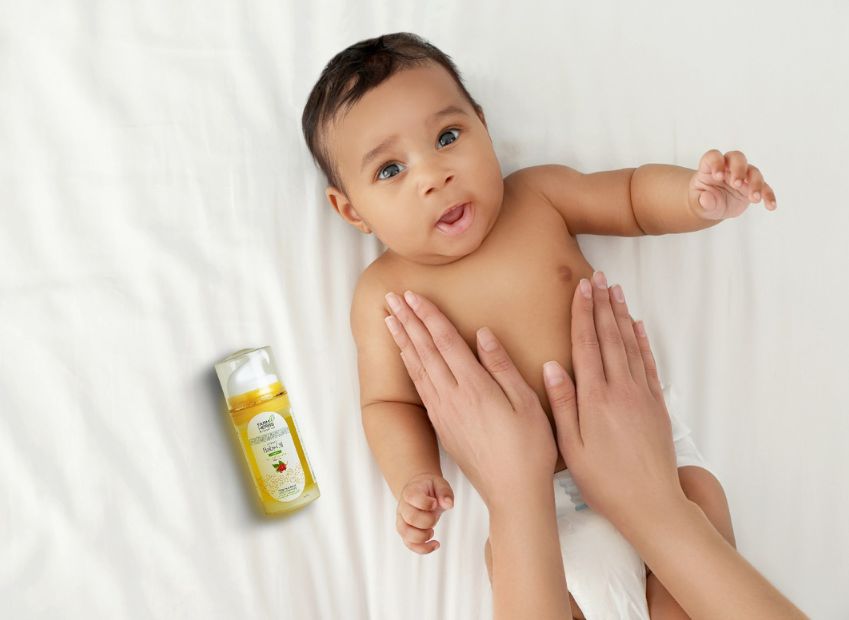
In many Indian homes, baby massage is a way to bond, nurture, and ensure the little one’s healthy growth. It’s something our nanis and dadis swore by, and science today backs its benefits too. A good massage improves blood circulation, helps with digestion, and can even promote better sleep for your baby. But the oil you choose makes a big difference.
Choosing the right infant massage oil can support your baby’s skin health and overall comfort. Let’s take a closer look at which oils are best suited for newborns and which ones you’re better off skipping.
Best Newborn Massage Oils
1. Coconut Oil
Coconut oil is practically a staple in Indian homes. Lightweight, cooling, and with antibacterial properties, it’s perfect for hot and humid regions. It absorbs quickly, doesn’t clog pores, and leaves the baby’s skin soft and supple. In states like Kerala and coastal Maharashtra, coconut oil has been the go-to for generations.
2. Jojoba Oil
Jojoba oil is a good option for babies with eczema or very dry skin, as it helps soothe and heal without clogging pores. It’s rich in vitamin E and closely resembles the skin’s natural oils, making it gentle and easily absorbed. If possible, choose cold-pressed jojoba oil for massages to ensure it’s pure and free from additives.
3. Olive Oil
Olive oil, especially cold-pressed extra virgin olive oil, is a gentle and nourishing option. It’s rich in antioxidants and vitamin E, making it great for hydrating the baby’s delicate skin. Unlike mineral-based baby oils, olive oil is natural and free from additives.
Many parents appreciate its slightly warming quality, especially during the cooler months. Just make sure your baby doesn’t have extremely sensitive or eczema-prone skin, and always do a patch test first.
4. Almond Oil
Sweet almond oil is another excellent choice. It’s rich in vitamins A and E, has a pleasant, nutty scent, and is known to be gentle on baby skin. It’s non-greasy and gets absorbed well, making it suitable for regular use.
Oils to Avoid for Infant Massage
1. Mineral Oils and Commercial Baby Oils
Many baby oils sold in stores are mineral oil-based and contain synthetic fragrances or preservatives. These can block pores, cause irritation, and don’t nourish the skin the way natural oils do. Always read the label, and if in doubt, skip it.
2. Mustard Oil
Mustard oil has long been used in North Indian households, especially during winter, for its strong warming effect. While it does help improve circulation, it’s generally not recommended for newborns. The oil can be too harsh for delicate baby skin and may cause irritation, rashes, or allergic reactions, especially in babies with sensitive skin.
If you still wish to use it based on family tradition, make sure to dilute it with a gentler oil like coconut oil, warm it slightly, and do a patch test first.
3. Essential Oils (Undiluted)
Though popular in aromatherapy, essential oils are far too strong for a newborn’s skin. They can trigger allergies or even breathing issues in some babies. Even when diluted, use only under guidance from a paediatrician.
4. Castor Oil
Despite its popularity in some traditional practices, castor oil is very thick and sticky. It’s not ideal for regular massage, and its purgative effect is more suited for medicinal use than skincare.
A Few Tips Before You Start
- Always do a patch test when trying a new oil to make sure your baby’s skin doesn’t react.
- Avoid massaging right after a feed. Wait at least 30 to 45 minutes.
- Make sure the room is warm, quiet, and free from drafts so your baby stays comfortable.
- Use soft, gentle strokes. Your touch should be soothing, not firm. The goal is to calm, not stimulate.
- Keep your nails short and hands warm before starting the massage.
- Talk or sing softly during the massage. Your voice is reassuring and helps deepen the bonding experience.
- Choose a time when your baby is alert and content, not sleepy, hungry, or cranky.
- Use a soft towel or mat under your baby and keep a fresh towel or muslin cloth handy to wipe off excess oil.
- After the massage, wait a few minutes before giving a bath so the skin can absorb the oil.
- If your baby seems uncomfortable or fussy during the massage, stop and try again another time. Not all babies take to it immediately.
At the end of the day, there’s no one-size-fits-all. Observe how your baby’s skin reacts, and adjust as needed. Trust your instincts, listen to your baby, and enjoy those quiet, nourishing moments. Choosing the right infant massage oil is just one part of the experience, but the love in your hands is what your baby will feel the most.